
Dust Buildup Can Affect Furnace Airflow
Dust inside and around a furnace can make it harder for air to move through your heating system. When buildup collects on a filter, blower parts, or accessible furnace surfaces, heated air may not circulate as freely as it should. That can leave some rooms feeling less comfortable than others and may allow more particles to travel through the home. We view furnace cleaning as one part of addressing dust-related airflow concerns, but the source and location of the buildup matter. A dirty filter calls for a different response than dust inside ductwork or an obstruction near a return vent. Paying attention to where dust gathers can help you understand what may be affecting comfort indoors.
Dust does not settle in just one place. It can collect on the air filter, around the blower area, on accessible furnace surfaces, and inside connected ductwork. Each location can affect the system differently, which is why a closer look is often more useful than assuming every dust problem has the same cause.
A filter is usually the first line of defense. As it collects dust, pet hair, and other particles, it can restrict the air entering the furnace. If too little air reaches the system, the furnace may have a harder time moving warm air through the house. We recommend checking filters based on the manufacturer’s guidance and replacing them when they are dirty or due for replacement.
Dust Can Collect Throughout the Heating System
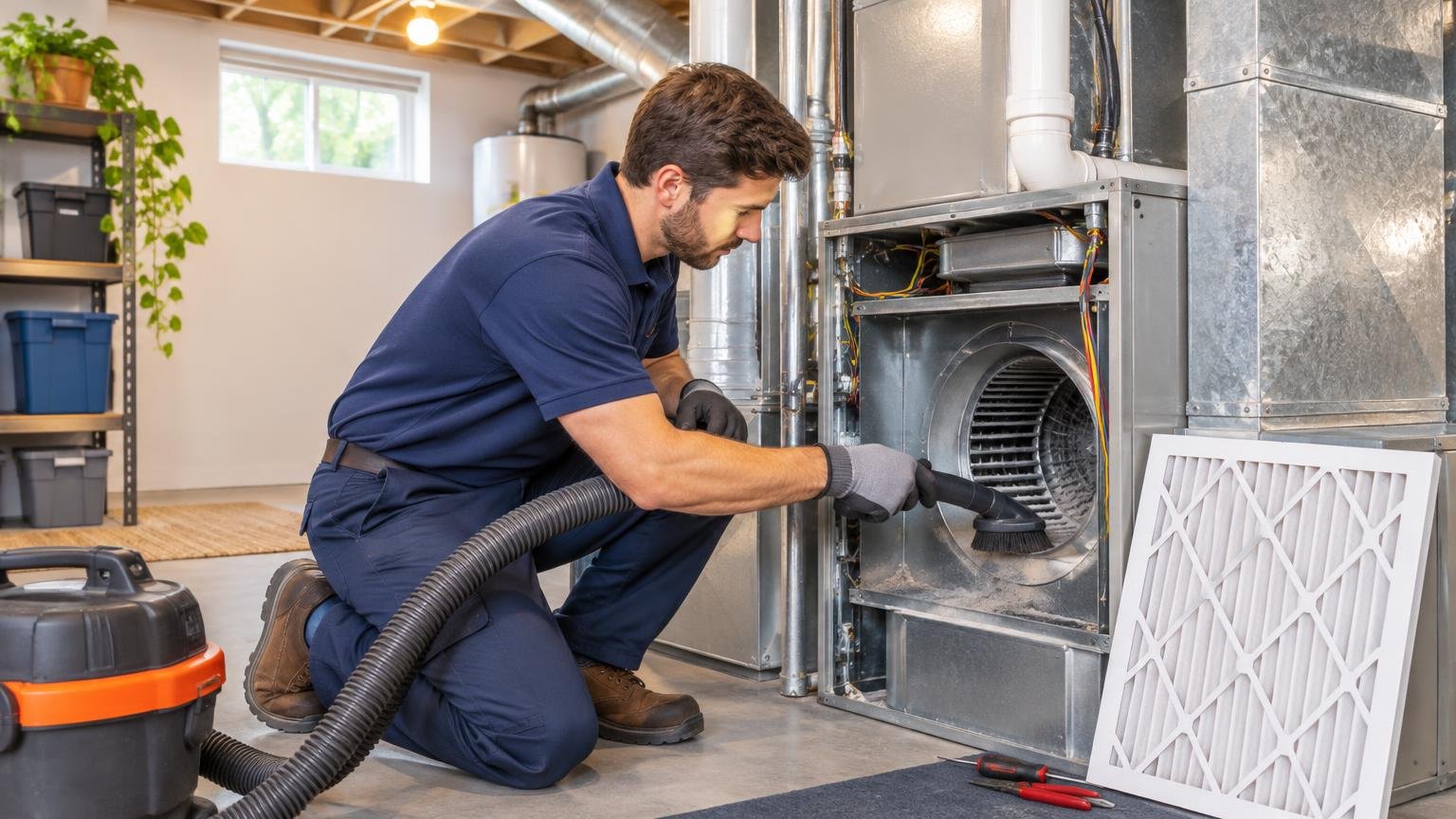
Inside the furnace, dust on blower parts and other accessible areas may interfere with normal air movement. Homes with shedding pets, active households, renovation work, or dirt tracked in from outdoors may see buildup more often. Dust can also collect near the furnace when the surrounding area is used for storage, which can make routine checks more difficult.
Ductwork is another possible collection point. While furnace cleaning focuses on the heating equipment, duct cleaning addresses buildup inside the pathways that carry air to and from rooms. A professional can help determine whether dust is mainly in the furnace, the ducts, or both.
Uneven Heating Can Signal an Airflow Concern
Restricted airflow often shows up as an everyday comfort problem. You may notice that one room feels cooler than the rest of the home, while another seems to receive more heat than it needs. Air may feel weak from certain vents, or the furnace may run longer before the thermostat setting is reached.
Those symptoms do not always point to one issue. A clogged filter, closed or blocked supply vent, furniture in front of a return-air grille, duct buildup, or a furnace component concern can all create similar results. That is why we encourage you to look at the whole airflow path instead of assuming that cleaning alone will solve the problem.
Signs that may point to an airflow concern include:
- Some rooms receive noticeably less air than others.
- Airflow from vents feels weaker than usual.
- The furnace seems to run longer to maintain the set temperature.
- Dust collects quickly around vents or on nearby surfaces.
- The filter becomes dirty sooner than expected.
A persistent issue deserves a qualified evaluation. We can help identify whether the concern involves the furnace, ductwork, vents, returns, or another part of the system. Finding the source matters because the right solution depends on what is actually limiting circulation.
Cleaning Needs Depend on the Dust Location
Dust can also affect more than furnace operation. As air travels through the heating system, loose particles may move through living spaces and settle on floors, furniture, shelves, and vent covers. Some dust is normal in any lived-in home, but recurring buildup around vents or unusually dusty rooms can be worth noting. Homes vary widely. A household with pets may have different dust concerns than a home with recent construction nearby or frequent foot traffic indoors. The best next step depends on where the dust is collecting and how the heating system is performing.
Furnace cleaning and indoor air quality are connected, but they are not the same service. Cleaning the furnace addresses dust and debris in accessible areas of the heating equipment. Duct cleaning focuses on buildup inside the ductwork that carries conditioned air through the home. Coil cleaning may also be relevant when dirt has collected on the coils and is affecting system performance.
Between professional visits, a few simple habits can help reduce avoidable airflow restrictions:
- Keep supply vents and return-air grilles clear of furniture, rugs, and stored items.
- Vacuum and dust regularly, especially around vents, returns, and the furnace area.
- Use the correct filter type for your system and replace it when needed.
- Avoid storing boxes, tools, or household belongings near the furnace.
- Watch for unusual dust patterns, reduced vent airflow, or changes in room comfort.
Professional Cleaning Protects Furnace Components
Professional furnace cleaning is a careful process, not simply a quick wipe-down. We focus on accessible areas where dust and debris may affect airflow or normal operation. The goal is to help maintain clearer air paths while identifying visible concerns that may need attention.
Furnaces contain components that should be handled with care. Internal parts can be damaged or disturbed when cleaning is done without the right knowledge or tools. For that reason, we recommend leaving internal furnace cleaning to qualified HVAC professionals who can work around the equipment appropriately.
During an evaluation, we can help determine whether dust is limited to the furnace or whether duct cleaning should also be considered. In some cases, an airflow concern may come from blocked vents, return-air restrictions, duct issues, or a furnace repair need rather than dust alone. A complete assessment helps avoid treating the symptom while missing the source.
Different Services Address Different System Areas
Our services include furnace cleaning, furnace maintenance, furnace repair, duct cleaning, and coil cleaning. Each service addresses a different part of the system. Furnace maintenance may be appropriate when the goal is to review overall operation, while furnace repair may be needed when a component is not working as intended. Duct and coil cleaning may be considered when buildup is present in those specific areas.
Everyday Habits Support Steady Airflow
Small household habits can support better airflow and help you notice changes early. They do not replace professional service, but they can reduce simple restrictions that make the heating system work harder. A clear path for supply and return air gives the furnace a better chance to circulate air as designed.
Return-air grilles deserve special attention. These openings allow air to travel back to the furnace so it can be heated and sent through the home again. When a return grille is covered by furniture, blocked by storage, or hidden beneath a rug, circulation can be limited even if the supply vents are open.
Keep an eye on these practical checks:
- Avoid closing several vents in an effort to redirect heat.
- Use entry mats to reduce dirt tracked in from outdoors.
- Clean up settled dust after indoor renovation projects.
- Keep pet bedding and grooming areas clean to reduce loose hair.
- Leave interior doors open when it is safe and practical to support room-to-room air movement.
Repeated weak airflow, uneven temperatures, and visible dust buildup are all worth tracking. A pattern can provide useful information when a qualified HVAC professional evaluates the system. Rather than guessing at the cause, note which rooms are affected, when the issue occurs, and whether the filter appears dirty sooner than expected.
For Bonney Lake, WA, households, dust concerns can involve more than a dirty surface. They can affect how air moves, how evenly rooms heat, and how often particles settle indoors. Checking where buildup appears and noting changes in airflow can help narrow down whether the concern involves the filter, furnace, vents, returns, or ductwork.
Support Better Airflow at Home
Pristine Air Services can help you schedule furnace cleaning when buildup may be affecting your system’s performance. Our team provides careful service to help you maintain a cleaner, more dependable heating system. To book an appointment in Bonney Lake, WA, contact us today.
Furnace Cleaning Questions Answered
How Often Should A Furnace Filter Be Checked?
We recommend checking your furnace filter regularly and following the filter manufacturer’s guidance for replacement. Homes with pets, more occupants, frequent indoor activity, or higher dust levels may need more frequent checks. A filter that looks overloaded with dust should not be left in place simply because a calendar reminder has not arrived yet.
Can A Dirty Furnace Filter Reduce Airflow?
Yes. A filter covered with dust and debris can make it harder for air to enter the furnace. When airflow is restricted before it reaches internal components, circulation through the home may weaken. You may notice less air from vents, longer furnace run times, or uneven comfort between rooms.
Does Furnace Cleaning Include Duct Cleaning?
Furnace cleaning and duct cleaning focus on different areas of the HVAC system. Furnace cleaning addresses accessible parts of the heating equipment, while duct cleaning addresses buildup inside the ductwork. Depending on where dust is found, one service may be more relevant than the other, or both may deserve consideration.
Why Is One Room Getting Less Heat Than Another?
Uneven heating can have several causes. A blocked vent, return-air restriction, dirty filter, duct concern, or furnace-related airflow issue may all affect how much warm air reaches a room. Because these problems can look alike, a professional assessment can help narrow down the cause.
Should I Clean The Furnace Myself?
Basic tasks, such as changing the filter and keeping the area around the furnace clear, are helpful. Internal furnace cleaning is best handled by qualified HVAC professionals who understand how to work around system components safely and appropriately. If dust keeps returning quickly or airflow remains weak after a filter change, the system may need a closer look.